



Who cut the cheese?
Parma, Italy Part of selecting Fano, Italy as the winter marina for Berkeley East was so we could travel in the...





















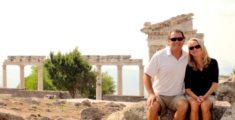

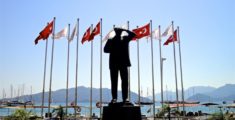
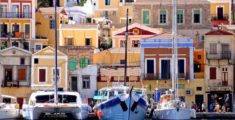










We have never chosen our travel destinations based on countries not visited. We do focus on having new experiences, often in places we’ve never been before, but the goal is much more than simply ticking off nations. We need a deep-seeded interest and desire to uncover what each place has to offer. That said, as we were planning our South America / Antarctica trip, we noticed that in less than an hour airtime from Mendoza Argentina, we could find ourselves in Chile. While the itinerary for our months-long escapade included two countries we had been to in the past, Brazil and Argentina, we had never traveled in Chile (unless we count the time that we accidently crossed the Argentina-Chile border while whitewater rafting).

There are two methods that travelers use to tally countries visited, the United Nations membership, and The Travelers’ Century Club list. The United Nations is comprised of 193 sovereign states, it is the world’s largest intergovernmental organization. It does not, however, include every country in the world, such as the Vatican. In contrast, The Travelers’ Century Club is a social club formed in 1954 for serious travelers, with an official list of 330 locales. This is quite a disparity with the UN number, easily explained by the fact that The Travelers’ Century Club takes into account not only countries, but also territories. For example, the United Nations only recognizes France, not their 13 overseas territories, like French Polynesia, and China makes the cut, but Hong Kong and Taiwan are not counted. Considering that nine of the worlds’ countries maintain multiple overseas interests, the extreme number difference is understandable.

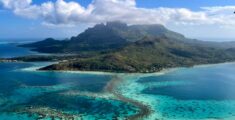
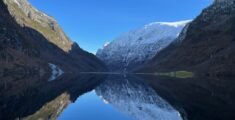
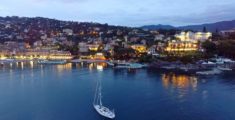
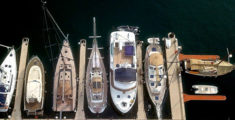
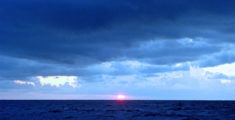
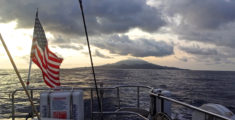
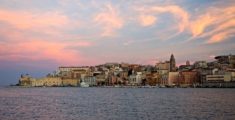
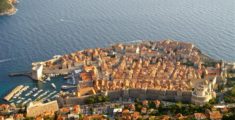
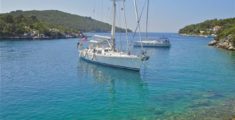
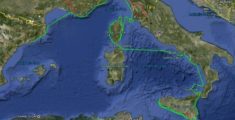
Our time on Berkeley East took us to many different places, with some cruising seasons adding multiple countries and territories to our total. For instance, the Caribbean has 16 sovereign nations, and 12 dependent entities, many just a day sail apart. And in the Mediterranean, Greek Island groups, the islands of Sicily and Sardinia, Gibraltar, the French island of Corsica, etc. are deemed separate from their parent nations, providing us the opportunity to easily increase our total. If we were going to count our countries visited by the United Nations definition, we are at 63; under the TCC’s broader spectrum, we have spent time in 115 countries and territories. From a “bragging rights” perspective, we prefer the higher figure.
After nearly two weeks touring in Argentina with Vine Society, our North Carolina wine group, we said goodbye to our friends and hopped on a plane to Santiago, Chile. The weather was bright, sunny and warm when we left Mendoza, it had been for days. But when we deplaned in Santiago, we were surprised to see travelers rugged up in parkas. We hadn’t even looked at the weather in Chile, never thought about how crossing the Andes Mountain Range might change the climate.


As we exited the airport into cold, rainy conditions we were happy that we had arranged for a pickup at the curb. Unfortunately, while the driver was there, his car was parked down the road and we had to trudge through the downpour and puddles with our large collection of luggage. We hoped the weather would improve quickly.
Chile (often referred to as Spaghetti Land) is a long, narrow country stretching along South America’s western edge, with nearly 4,000 miles of Pacific Ocean coastline. Santiago, its capital, sits in a valley surrounded by the Andes and Chilean Coast Range mountains creating a dramatic backdrop for the massive city. We drove through the busy streets and arrived at our hotel, a bit damp, but excited to begin our brief exploration of Chile’s largest city, plus a few surrounding areas.

The vibrant city of Santiago is home to approximately seven million people, a huge contrast to our recent visits to uninhabited Antarctica, and the sparsely occupied region of Salta, Argentina. But we enjoy, and appreciate, what big cities have to offer, and Santiago was no exception.


We chose a hotel located in the Lastarria neighborhood, the cultural and historical hub of Santiago. When the rain tempered, before we ventured out, we did the unthinkable and opened the one suitcase that had not been touched for weeks, since we departed our Antarctica ship. But the colder temperatures required the appropriate jackets, pants and shoes; luckily, most everything we needed was right on the top of the bag. We wandered the streets and alleys, soaking up the atmosphere of locals out for a Sunday evening.


During our days in the city, we cruised the streets discovering palaces, museums, parks, and markets. We were impressed by Santiago’s cleanliness, something often missed in large, active cities. Our guide (and part-time school psychiatrist) shared the city’s history, and present-day situations in the country, which are surprisingly similar to happenings in the US.

While one would think that nearly two weeks of wine tasting in Argentina would be enough, we could not leave Chile without a dip into one of the world’s top ten wine producers, and the largest in South America. With some 800 active wineries, Chile has carved a niche for itself in the global wine industry. The grape represents a significant part of the country’s economy, the industry employing more than 100,000 people, with 60% of all wine exported to other countries.


Two of the country’s most important wine regions are the Maipo and Colchagua Valleys; fortunately for us both were within reach of our Santiago base, and we were able to visit several acclaimed producers in each area.


The Maipo Valley is recognized for its exceptional Cabernet Sauvignon and forms the backbone of some of Chile’s most distinguished wine production. The Colchagua Valley, also known for classic red wines, is highly recognized for the unique Carménère varietal. Both regions are characterized by a Mediterranean-style climate with hot, dry summers and cold, wet winters.


Although we know and love Cabernet Sauvignon, we were less familiar with the Carménère varietal and were anxious to expand our knowledge and palettes. The grape was originally planted in Bordeaux, France, where it was used to develop deep red wines. Rarely found in France today, Chile now represents the largest area planted with the grape, the country producing the vast majority of Carménère wines worldwide. It is considered the emblematic varietal of Chilean wine. We spent two of our days in Chile visiting, tasting and learning about some of the world’s finest, yet most underappreciated wines.


We have enjoyed visiting Antinori wineries in Italy and the USA, so we were happy to find one of Italy’s oldest and most prestigious producers in Chile. Haras de Pirque, in the Maipo Valley, is set against the breathtaking backdrop of the Andes Mountains, with beautiful vineyards and state-of-the-art facilities. The winery is built on the country’s oldest thoroughbred racehorse breeding farm, founded in 1892. The name, Haras de Pirque means Pirque Stud Farm and the winery’s horseshoe-shaped design and horse-themed labels reflect the land’s heritage. The highlight of our tour was the tasting session, where we were impressed by their Cabernet Sauvignon and Carménère wines.


During our visit to Concha y Toro winery in the Maipo Valley, we explored the meticulous vineyards, toured the underground wine cellars, and saw the historic Casa Don Melchor. Despite selling 33 million cases of wine per year, and reminding us a bit of Disney World, it produces some stellar red wines. A private wine tasting session showcased their exquisite Don Melchor and Casillero del Diablo wines.


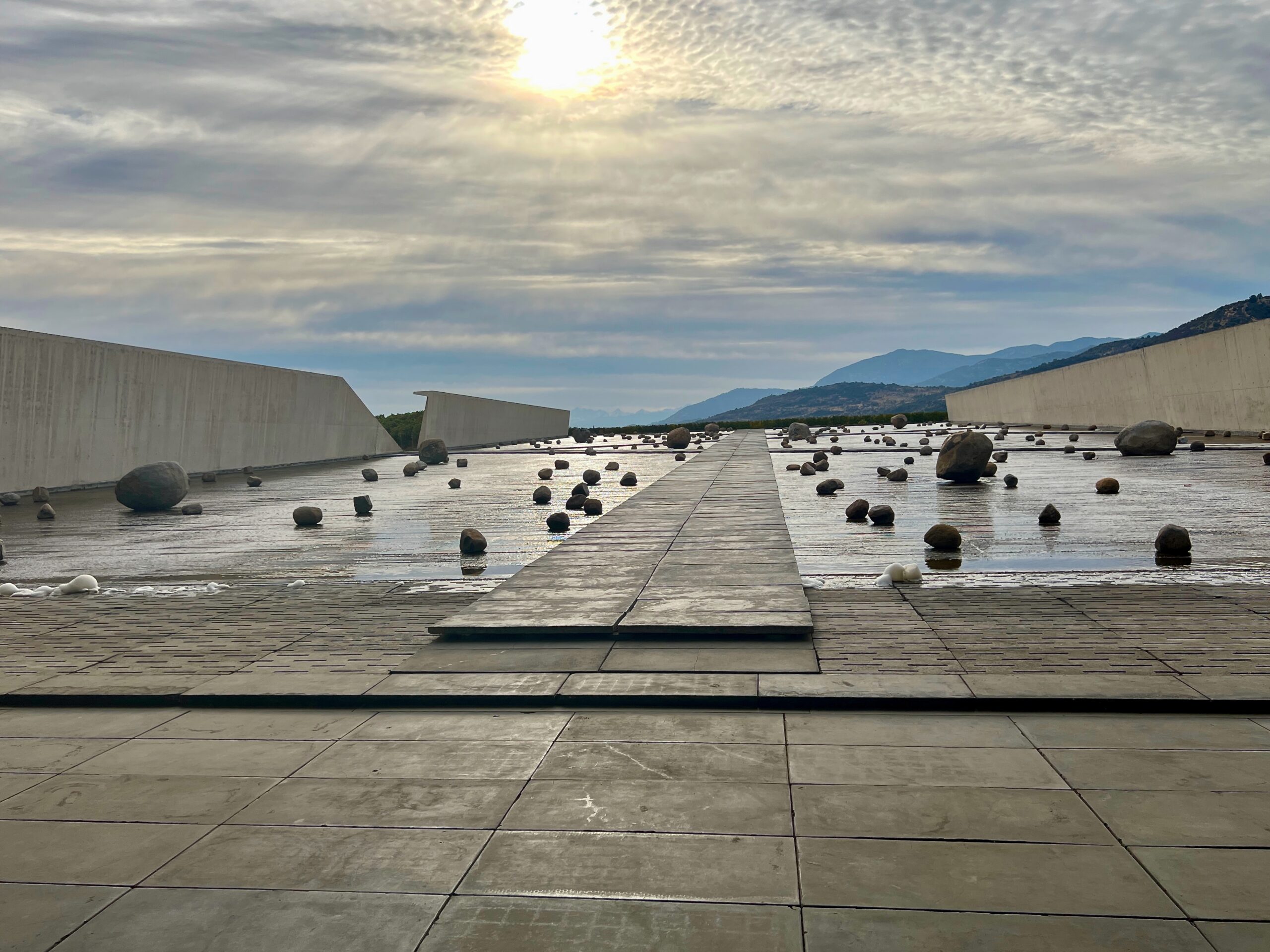
Viña Vik is a renowned winery and vineyard spanning 2,500 acres in the picturesque Millahue Valley (part of the Colchagua Valley). The winery’s wines consistently receive high scores, with the 2021 vintage (a blend of Cabernet Franc and Cabernet Sauvignon) earning a perfect 100 points. While the setting is stunning, Viña Vik is known for its innovative and holistic approach to winemaking, which includes making their own barrels. They have developed a concept called “Barroir”, where they use fallen trees from their 100+ year-old oak grove to build and toast their French barrels in their own cooperage. They also craft amphorae from clay found on the grounds. We had never seen the barrel-making process in person; once again a new winery experience.


Clos Apalta is an award-winning winery in the Apalta Valley (within the Colchagua Valley). Founded in 1994, the seven-floor gravity-fed winery is carved 115 feet into the rock, blending advanced technology with nature. The unique architecture and high-quality wines reflect the winery’s commitment to excellence. Clos Apalta is known for its superior Carménère wines, which we thoroughly enjoyed, perhaps our favorite Chilean wines.


Fuegos de Apalta is an acclaimed restaurant located at the Montes Winery in the heart of the Apalta Valley (also in the Colchagua Valley). Founded by renowned Argentine chef Francis Mallmann, the restaurant is celebrated for its exceptional Argentine cuisine, particularly its steaks. We enjoyed the best Argentine steak of our entire South American trip here, in Chile, even surpassing the many that we had in Argentina.

Having had a private tasting led by a family member of Cousiño Macul before leaving North Carolina, we were already familiar with their delicious wines. But given the fact that the winery is in Santiago, we couldn’t resist tasting them in their natural habitat. Once outside the city limits, Santiago has expanded to completely surround the winery. We toured the historic buildings, where Cousiño Macul wines have been produced since the late 1800s, and were reintroduced to one of our favorite new grape varietals, Sauvignon Gris.
Our four-day stay in Chile was quick, but enlightening, albeit perhaps not as exciting as our first foray into the country when the whitewater raft that we were in got caught in a rapid and barreled across the borderline between Argentina and Chile. Since we had no Chilean visas or our passports in hand, our guides told us to jump into the cold water and swim upstream to get back into Argentina before we were spotted. Arriving in the country legally this time was much more civilized, and we now feel it is a legitimate addition to our country tally.

Membership in the Travelers’ Century Club (TCC) is limited to those travelers who have visited one hundred or more countries and territories of the world. We are not currently members, but we think it might be time to join and use it as a template for guidance and inspiration to discovering some of the world’s remaining 216 lands.
